How the Maneki-neko Became Popular Across Asia
Key Takeaways
- The Maneki-neko began in Japan and gradually became a familiar symbol of prosperity, welcome and good fortune across much of Asia.
- The history of the Lucky Cat reflects how a traditional cultural symbol can travel across borders while taking on new colours, designs and associations.
- Regional styles differ, but the core meaning remains largely consistent, especially around prosperity, positive beginnings and opportunities.
- When choosing one as a gift, consider the recipient, occasion, interior style and the meaning you want the gesture to convey.
Introduction
The Maneki-neko, better known as the Lucky Cat or Fortune Cat, is a familiar sight across Asia. You might see one greeting customers from a shop counter, sitting near the entrance of a restaurant or taking pride of place in someone's new home.
What is perhaps less familiar is the story of how this Japanese good-luck symbol became so widely recognised beyond Japan. As the Maneki-neko travelled across the region, different cultures gave it their own touches, from gold finishes linked with prosperity to more contemporary designs suited to modern homes. Yet the sentiment behind it has remained much the same: a wish for luck, happiness and good things to come.
At Art In Bloom, this is also what makes the Lucky Cat such a meaningful choice for life's new beginnings. We often associate it with occasions such as grand openings and housewarmings, where wishing someone prosperity feels especially fitting. Exploring the history of the Lucky Cat gives us a better sense of how this centuries-old symbol came to hold such lasting significance across Asia.
The Origins of the Maneki-neko in Japan
The exact origins of the Lucky Cat are difficult to pin down, largely because several stories have become associated with it over the centuries. The Maneki-neko is generally linked with Japan's Edo period, when cats already had a practical place in everyday life by helping to keep rodents away from food, grain and valuable materials.
One of the best-known origin stories is connected with Gotokuji Temple in Tokyo. According to the temple's own account, a cat sitting near the entrance appeared to beckon a passing feudal lord inside. Soon afterwards, a thunderstorm began, and the lord was grateful to have found shelter. The cat consequently became associated with bringing an unexpected turn of good fortune.
Other legends offer different explanations, which is why there is no single agreed story behind the Maneki-neko. What they share, however, is the idea of a cat drawing something favourable towards a person, whether that means safety, visitors or opportunity.
The gesture itself is worth noting too. To someone unfamiliar with Japanese body language, the raised paw can look like a wave. In Japan, however, beckoning is traditionally performed with the palm facing down and the fingers curling towards the person. The Maneki-neko's pose therefore makes much more sense when viewed in its original cultural context.
As figurines became established, details such as collars, bells and coins added further meaning. Traditional examples often resemble calico cats, while the koban coin seen on many figures strengthens the association with wealth and commercial fortune.
These details give the evolution of the Maneki-neko more context. Rather than appearing fully formed as the familiar decorative cat we know today, its symbolism developed through folklore, everyday beliefs and visual traditions before eventually travelling beyond Japan.
How the Maneki-neko Travelled Beyond Japan
The Maneki-neko's spread across Asia happened gradually. As travel, trade and cultural exchange increased, Japanese customs and decorative objects became more familiar in neighbouring countries, while Japanese communities overseas helped introduce symbols from home into new settings.
The Lucky Cat found an especially natural place in shops, restaurants and other businesses. Its association with welcoming customers and attracting prosperity made it an easy symbol to adopt, even for people who may not have known the folklore behind it.
Its spread became particularly visible in commercial settings, where shopkeepers and restaurant owners across East and Southeast Asia began displaying the figure near entrances, counters and cash registers.
As more people encountered the figure in everyday commercial spaces, its meaning became increasingly familiar. The cat's raised paw, cheerful expression and connection with good fortune were simple enough to cross cultural boundaries without needing much explanation.
As the Lucky Cat became more familiar outside Japan, this period in the history of the Lucky Cat also saw it evolve from a distinctly Japanese figurine into a symbol that different cultures could interpret through their own ideas of wealth, welcome and good fortune.
That is why Lucky Cats found across Asia today can look quite different from their traditional Japanese counterparts. The design may have evolved, but the message behind it remains much the same: a warm wish for luck, prosperity and positive opportunities.
How Lucky Cats Differ Across Asia
The Maneki-neko may have begun in Japan, but it has never remained visually fixed. As the figure spread across Asia, different colours, materials and decorative details became more prominent. The result is the modern Maneki-neko, which can range from a traditional ceramic figure to a sleek decorative piece designed for a contemporary home.
Japan
Traditional Japanese Maneki-neko are commonly depicted as calico cats with collars, bells and koban coins. Ceramic production has also become part of the tradition in places such as Tokoname in Aichi Prefecture, a pottery town known for its many interpretations of the beckoning cat.
China and Hong Kong
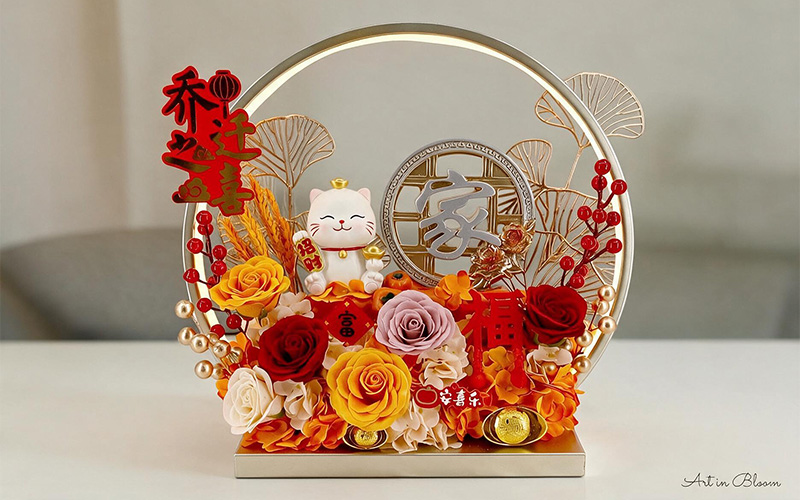
Across Chinese-speaking communities, gold versions have become especially visible in shops, restaurants and other businesses. Gold already carries strong associations with wealth and abundance, so the colour fits naturally with the Lucky Cat's commercial symbolism.
Coins, ingots and other wealth-related motifs may also be incorporated into the design, giving these versions a more overtly prosperous appearance than the classic Japanese calico cat.
Taiwan
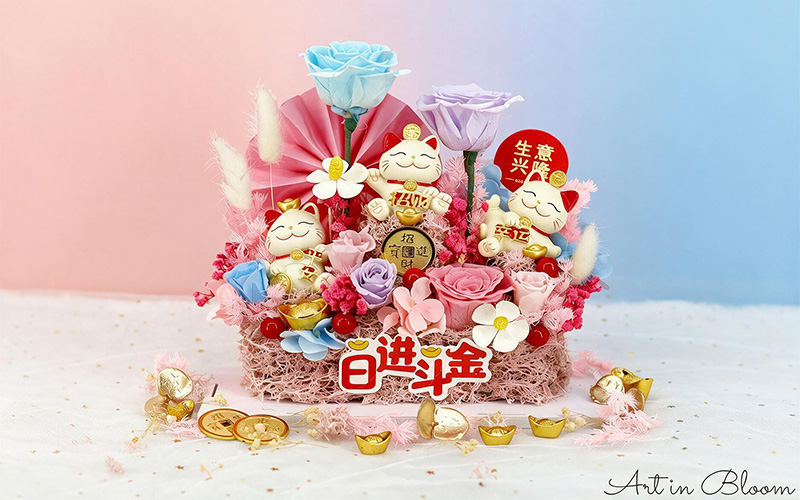
In Taiwan, it is common to encounter Lucky Cats in both commercial and domestic settings. Alongside recognisable traditional versions, contemporary designs may use pastel colours, simplified shapes or playful expressions.
These styles make the symbol easier to incorporate into cafés, boutiques and modern homes, showing how the Lucky Cat can adapt aesthetically while remaining recognisable.
Singapore and Southeast Asia
In Singapore and elsewhere in Southeast Asia, the Lucky Cat has become particularly familiar around milestones such as shop openings, housewarmings and business celebrations.
This gives the figure a slightly different role from one that simply sits permanently beside a shop till. It may also be selected specifically as a congratulatory gift, with the colour and style chosen to suit the recipient's home, office or business.
At Art In Bloom, this is why we suggest looking beyond whichever design appears the most striking. A gold figure can complement the celebratory mood of a new business opening, whereas a cleaner or more understated piece may sit more naturally in a contemporary home.
The right Maneki-neko gift should feel connected to both the occasion and the person receiving it.
What to Consider When Gifting a Maneki-neko
Choosing a Lucky Cat is usually easier when you begin with the occasion and what you want the gift to say.
For a business opening, the focus may be on prosperity, growth and new opportunities. For a housewarming, the meaning may lean more towards happiness, stability and a positive start in a new space. Thinking about the recipient’s milestone first can help narrow down which design feels most appropriate.
Personal taste matters too. Someone who appreciates Japanese culture may prefer a traditional calico-style figure, while a recipient with a modern home or office may be drawn to a cleaner, more contemporary design.
It can also be worth looking at the finer details. Colours, raised paw positions and accessories may carry different symbolic meanings, depending on the design. Knowing a little about the history of the Lucky Cat can make these choices feel more intentional, rather than simply decorative.
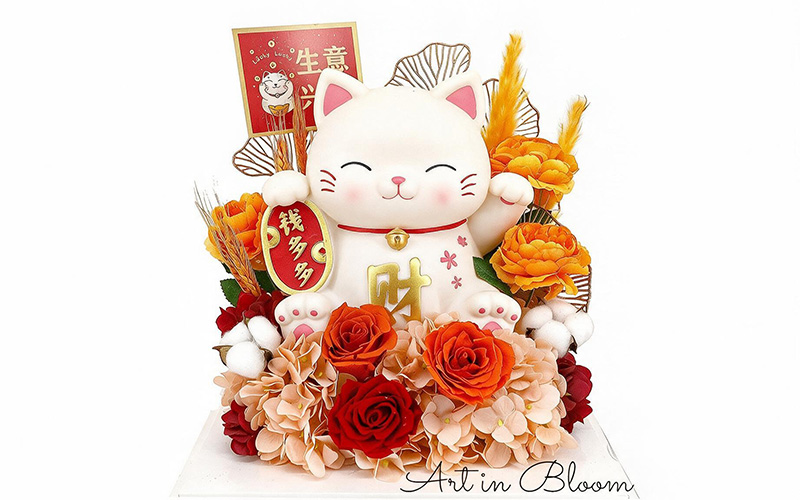
At Art In Bloom, we also see presentation as part of the gifting experience. A Fortune Cat gift paired with flowers can work especially well for grand openings, housewarmings and congratulatory occasions, adding a more celebratory touch to the gesture.
Timing can be just as important. If you want the gift to arrive on the actual day of a move-in, opening or milestone, arranging same-day delivery with a florist can help make the moment feel more considered and timely.
Conclusion
The history of the Lucky Cat shows how a Japanese cultural symbol travelled across Asia while taking on different colours, styles and uses along the way. Yet despite those changes, the idea behind the Maneki-neko has remained easy to recognise: welcoming something positive into a home, business or new chapter.
That lasting symbolism is what makes it particularly fitting for occasions such as housewarmings, grand openings, promotions and other milestones. Rather than being purely decorative, the right Lucky Cat can reflect both what the recipient is celebrating and the good wishes you want to send.
At Art In Bloom, we make that gesture easier to personalise by offering Lucky Cats that can be chosen around different recipients, spaces and occasions, with floral gifting options available when you want to make the celebration feel more complete. Explore our Lucky Cat collection for your next housewarming, business opening or congratulatory gift, and choose a piece they can continue displaying long after the flowers and celebrations have passed.