What Happens to Funeral Flowers After the Service?
Key Takeaways:
- Funeral flowers may be left at the gravesite, shared with family members, preserved as keepsakes, or donated after the service.
- The way flowers are handled often depends on family preferences, cultural practices, available space, sentimental value, and the condition of the arrangements.
- Individual blooms can be pressed, framed, or kept as mementoes, allowing part of the floral tribute to remain after the fresh flowers have faded.
- Flowers that are still in good condition may sometimes be donated, but families should check with the receiving organisation first to confirm that fresh flowers are accepted.
- Families choosing funeral flowers can also consider what may happen to the arrangements afterwards, particularly if they hope to preserve, share, or reuse selected blooms.
Introduction
Funeral flowers help create a respectful setting during a wake or memorial service, but families may also need to decide what to do with them once the service has ended. They serve as visual expressions of sympathy, respect, and support, helping to create a space where family members and visitors can gather to remember a loved one.
While much attention is often given to choosing and sending funeral flowers, fewer conversations focus on what happens to flowers after a funeral. Once the service concludes and the floral tributes have fulfilled their role at the wake, families may handle them in different ways, depending on personal preferences, traditions, and practical considerations.
Families may choose to leave the flowers at a gravesite, share them with loved ones, preserve selected blooms, or donate suitable arrangements. Knowing these options can make it easier to decide what feels appropriate after the service.
What Happens to Funeral Flowers After A Funeral?
There is no single answer to what happens to flowers after a funeral. The decision often rests with the family and may be influenced by cultural practices, available space, sentimental value, and the flowers' condition.
For example, limited space at home may make sharing the flowers more practical, while arrangements that are still fresh may be more suitable for donation or preservation.
After the service, funeral flowers may be:
- Left at the gravesite as a final tribute.
- Shared among family members and visitors.
- Preserved as keepsakes or lasting mementoes.
- Donated so they can continue to be appreciated elsewhere.
Although the flowers may no longer be displayed at the wake, they can continue to provide comfort and meaning in different forms.
How This Can Support the Grieving Process
Funeral flowers are often associated with the support received during a difficult time.
After the funeral, seeing or keeping a portion of a floral tribute can remind you of the love, respect, and condolences shared by friends, relatives, colleagues, and the wider community.
For some families, preserving or redistributing flowers creates an opportunity to extend the remembrance process beyond the service itself. A pressed flower, framed bloom, or individual stem shared with a relative can become a tangible reminder of the person and the support shown during the funeral.
Every family experiences grief differently, and the way flowers are handled afterwards often reflects individual preferences and circumstances.
The Journey of Flowers After the Funeral
When considering what happens to flowers after a funeral, families can choose an option that suits their circumstances and the condition of the arrangements.
Leaving Flowers at the Gravesite
One option is to leave flowers at the gravesite after the funeral.
In burial services, selected arrangements or individual flowers may be placed near the grave as a final tribute. This keeps the flowers closely connected to the place of remembrance.
For some families, this gesture provides a sense of closure and allows funeral wreaths and flowers to continue serving their commemorative purpose after the service has concluded.
The suitability of this option may depend on cemetery regulations, weather conditions, and the type of flowers involved.
Sharing Flowers With Family and Visitors
Another common approach is to distribute flowers among family members or attendees.
Relatives and close friends may take home individual stems or smaller portions of an arrangement as a physical reminder of the service.
This allows the floral tribute to be shared among those who gathered to pay their respects and can help extend the sense of connection created during the funeral.
For larger arrangements, distributing flowers can also be a practical way to ensure the blooms continue to be appreciated after the wake.
Creating Keepsakes From Funeral Flowers
Some families choose to preserve flowers as lasting mementoes.
Flowers can be pressed, framed, or incorporated into keepsake items that commemorate the individual being remembered. Preserving flowers in this way allows part of the tribute to remain long after the fresh blooms have faded.
Because not all flowers preserve equally well, those considering this option may select specific blooms from the arrangement that hold particular significance.
For families seeking a tangible reminder of a loved one, floral keepsakes can become meaningful personal treasures.
Donating Flowers for Continued Appreciation
In certain situations, funeral flowers may be donated after the service.
Flowers that remain in good condition can sometimes be shared with care facilities, community organisations, or places of worship where fresh flowers are welcome and can be appreciated by others.
Families considering this option should check with the organisation beforehand to confirm whether it accepts fresh flowers and whether there are any requirements regarding the condition, type, or delivery of the arrangements.
While this option isn't available in every circumstance, some families find comfort in knowing the flowers can continue bringing beauty and comfort beyond the funeral itself.
Choosing Funeral Flowers With What Comes Afterwards in Mind
Although funeral flowers are primarily selected for their role during the wake or memorial service, thinking about what happens to flowers after a funeral may also help families decide which arrangements suit their needs.
Flowers that maintain their appearance well may be more suitable if the family wants to keep them longer. Arrangements that include meaningful flower varieties may also be easier to preserve as keepsakes or distribute among family members.
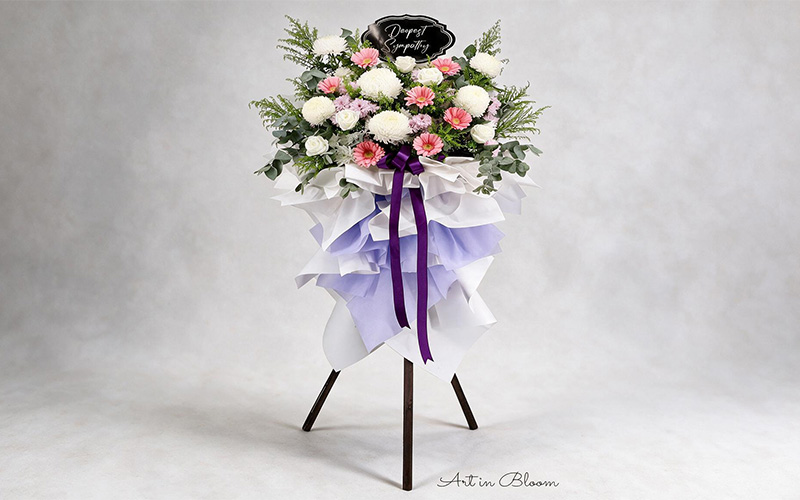
Practicality can be important as well. A funeral flower stand may create a strong presence during the wake, while individual blooms in those arrangements may later be shared among relatives or used for remembrance.
Ultimately, the most important consideration remains the sentiment behind the tribute and the support it conveys to the family.
Conclusion
After the service, each family may choose a different way to handle the flowers depending on their wishes, traditions, and practical circumstances. Whether left at a gravesite, shared among loved ones, preserved as keepsakes, or donated for others to appreciate, funeral flowers can continue carrying meaning beyond their original display.
While each family may choose a different path, these possibilities show how funeral flowers can remain part of remembrance and healing after the service. Their value extends beyond decoration, serving as symbols of support, respect, and connection during a difficult time.
At Art In Bloom, our condolence flowers delivery options include thoughtfully designed arrangements for families who want to express sympathy with care and consideration.
Choose a floral tribute that feels appropriate for the service and the family.