Why Does a Maneki-neko Wear a Bell?
Key Takeaways
- The maneki neko bell is linked to the historical practice of treasured domestic cats in Japan wearing collars and bells.
- Bells helped owners keep track of their cats, while decorative collars and accessories also reflected the animal’s value in the household.
- The bell itself should not be treated as a separate promise of good fortune. Instead, it became part of the familiar appearance of the Maneki-neko, a figure associated with prosperity and good fortune.
- Other lucky cat features, including the collar, decorative bib, raised paw, and koban coin, contribute their own meanings to the Maneki-neko’s overall symbolism.
- When choosing a Maneki-neko as a gift, considering its individual accessories can help you select a design that suits a housewarming, business opening, workplace, or other special occasion.
Introduction
When most people think of a Maneki-neko, the first thing that comes to mind is usually its raised paw. This iconic gesture has made the Lucky Cat one of the most recognisable symbols of good fortune and prosperity.
However, a traditional Maneki-neko often includes several other distinctive lucky cat features. One detail that frequently appears but receives less attention is the small bell worn around the cat's neck.
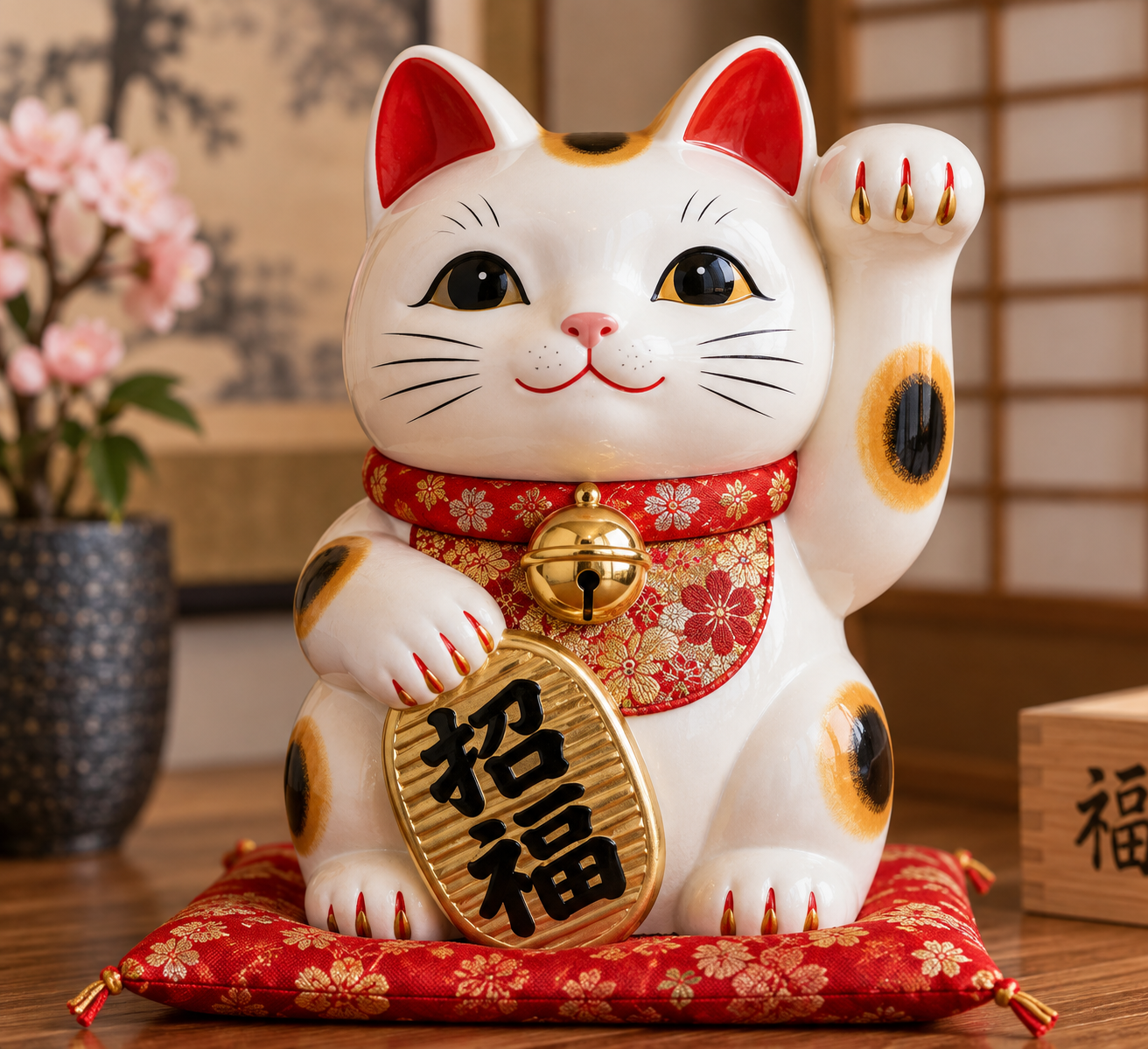
The maneki neko bell is more than an ornamental detail. Its appearance can be connected to the collars and bells once worn by treasured domestic cats in Japan. Understanding where this detail comes from adds context to the familiar appearance of the Lucky Cat today.
Why Does a Maneki-neko Wear a Bell?
The maneki neko bell reflects an earlier practice of fitting treasured domestic cats in Japan with collars and bells. Owners could use the bell to track their cats, and these accessories also reflected the animal's value and status within the household.
As the Maneki-neko developed into the familiar figure seen today, these details helped give the Lucky Cat the recognisable appearance of a valued domestic companion.
This distinction is useful when considering the lucky cat bell meaning. Rather than treating the bell itself as a separate symbol that directly promises good fortune, it can be understood as part of the traditional image of a cared-for cat. The bell then sits within the wider symbolism of the Maneki-neko, a figure associated with good fortune and prosperity.
A Brief History Behind the Tradition
The history of the Maneki-neko helps explain why details associated with domestic cats became part of its design.
During this time, cats could be highly valuable, particularly in silk-producing areas where they helped protect silkworms from rats. THistorical references and portraits also show how prized pet cats could be distinguished by neckwear such as red collars.
This context adds something beyond the bell itself. Cats were useful and cherished, while red-collared cats became a recognisable visual motif. Maneki-neko figurines became popular during the Edo period, carrying familiar domestic-cat features into an auspicious object associated with welcoming people and prosperity.
Over time, collars, bells, raised paws, and other accessories varied between designs, but they remained part of the visual language that makes the Maneki-neko immediately recognisable today.
Other Common Maneki-neko Accessories
The Collar: A Symbol of Care and Value
Traditional red collars were commonly associated with valued domestic cats in Japan. On a Maneki-neko, the collar helps present the cat as cared for, cherished, and connected with domestic life.
It also reinforces that the Lucky Cat is a valued companion rather than a stray. Within the figure's broader lucky cat symbolism, the collar therefore adds a sense of care and value without needing to represent a separate promise of good fortune.
The Decorative Bib: A Link to Tradition
Many traditional Maneki-neko also wear a small decorative bib around their neck.
The exact origin of this feature is less clearly documented than the collar. Because the evidence around one fixed origin is less clear, it is safer to treat the bib as a decorative feature within the wider Maneki-neko tradition rather than assign it a specific historical source.
Its decoration can still contribute to the figure's wider good-fortune imagery and traditional appearance.
The Koban Coin: A Symbol of Prosperity
The koban coin is another familiar accessory that can appear with the maneki neko bell and collar.
The koban was a gold coin used in Japan during the Edo period and became associated with wealth and prosperity. Many Maneki-neko are shown holding or displaying a koban to represent financial good fortune and success.
Combined with the raised paw, the coin reinforces the Lucky Cat's role as a symbol of abundance and opportunity.
Choosing a Maneki-neko as a Gift
When choosing a Maneki-neko as a gift, it can help to look beyond the colour and raised paw and consider the accessories included in the design.
The individual details can help you match the figurine more closely to the reason you are giving it. A bell and collar may appeal to someone who appreciates the more traditional appearance of the Maneki-neko, while a prominent koban coin creates a clearer connection with prosperity and may be better suited to a business-related occasion. When selecting a maneki neko gift, considering these details can therefore make the choice more intentional rather than choosing on appearance alone.
Also consider the occasion. A grand opening fortune cat can mark the opening of a new shop, office, or business, while a traditional design with a bell and collar can suit housewarmings or general well-wishing. Looking at the occasion alongside the individual features gives you a more practical way to narrow down the design.
For a business reception or counter, a design with an obvious raised paw, koban, or other prosperity detail can make the intended message clear. For a desk, shelf, or home display, a more compact bell-and-collar design may be easier to place while keeping the traditional look. A fortune cat gift can therefore be chosen according to both its symbolism and where the recipient is likely to display it.
Ultimately, understanding the meaning behind the accessories can help you choose a Maneki-neko that feels more thoughtful, personal, and suited to the occasion.
Conclusion
While the raised paw may be the most famous feature of the Maneki-neko, the maneki neko bell is also a recognisable part of its appearance. Its connection with the bells once worn by treasured domestic cats provides another way to understand how everyday details from Japanese life became incorporated into the Lucky Cat.
Together with the collar, decorative bib, and koban coin, the bell helps distinguish different elements of the figure and what they can represent. Understanding these details can also make it easier to choose a Maneki-neko whose design suits the recipient and occasion.
At Art In Bloom, you can browse our collection of Lucky Cats and consider details such as the bell, collar, raised paw, and other design elements when choosing one for a home, workplace, business opening, or special occasion.
Explore our Lucky Cat collection to find a design suited to the occasion.