How to Make Flowers Last Longer: Expert Tips for Fresh Floral Arrangements
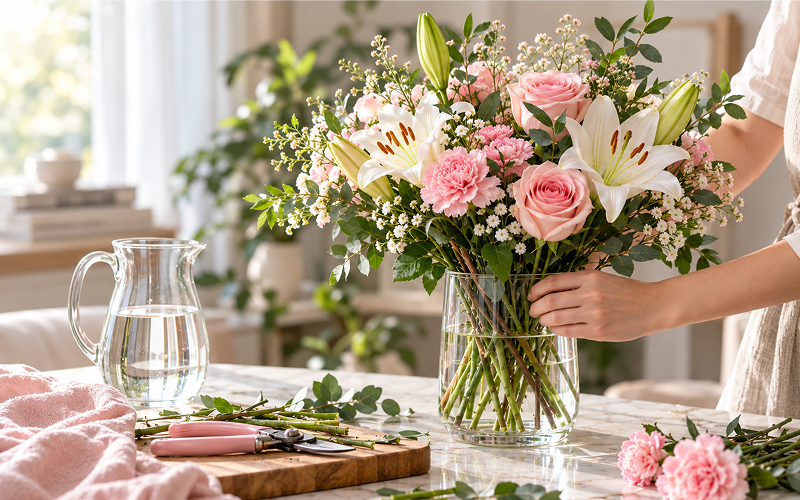
Key Takeaways
- Clean vases, fresh water, and regularly trimmed stems help make flowers last longer by supporting water absorption and limiting bacterial growth.
- A cool indoor location away from direct sunlight, strong air-conditioning vents, and ripening fruit can help protect delicate blooms.
- Different flowers have different vase lives. Roses, lilies, hydrangeas, and orchids may require slightly different care.
- Removing submerged leaves, monitoring water levels, and taking out ageing blooms can help maintain a bouquet's appearance.
- Choosing a well-prepared bouquet and following suitable care practices at home can help you enjoy your flowers beyond the day of delivery.
Introduction
Fresh flowers can brighten a room immediately, but their appearance begins to change as soon as they are cut from the plant. Without their roots, flowers depend on the water and conditions you provide after arranging them.
Learning how to make flowers last longer begins with understanding what affects their freshness. A clean vase, freshly trimmed stems, suitable water, and the right display location can all improve water uptake and reduce the bacterial growth that contributes to premature wilting.
Whether you have received flowers for a birthday, anniversary, graduation, or another meaningful occasion, knowing how to keep flowers fresh helps you enjoy their beauty beyond the day of delivery.
This guide covers practical ways to make flowers last longer, from preparing your bouquet and maintaining fresh water to caring for different flower varieties in Singapore's warm climate.
What Affects How Long Fresh Flowers Last?
A bouquet's lifespan depends on the condition of its flowers, their natural characteristics, and the environment in which they are displayed.
Understanding these factors helps you make flowers last longer by identifying what can be managed at home and what is part of the flowers' natural ageing process.
The Natural Lifespan of Each Flower
Different flowers do not age at the same rate.
Carnations, chrysanthemums, orchids, and alstroemeria are generally known for lasting well in a vase. Hydrangeas, tulips, and some garden roses may begin changing sooner, depending on their maturity and display conditions.
In a mixed bouquet, some flowers may continue opening while others begin losing petals or softening. This is normal and does not necessarily indicate poor care.
How Fresh the Flowers Were When Arranged
The condition of flowers before arranging strongly influences their vase life.
Flowers that have been properly stored, hydrated, and handled are more likely to arrive with firm stems, healthy foliage, and petals showing fewer signs of bruising.
Some flowers are intentionally arranged before they fully open. Lilies, for example, may arrive with several closed buds so they can continue blooming after delivery.
When choosing a fresh flower hand bouquet, look at the flower varieties and bloom stages as well as the overall design. A bouquet with some closed buds may change more noticeably over the following days, while one with more open flowers gives a fuller presentation immediately.
The Condition of the Stems
Cut stems absorb water through internal vessels. During transportation and handling, these vessels may become less effective because of dried tissue, bacterial buildup, or other blockages.
Thicker, woody stems may be more difficult to trim cleanly than softer stems, making sharp floral shears particularly useful. Hollow stems may also be more vulnerable to crushing when cut with blunt tools.
Fresh trimming helps remove deteriorating tissue and expose a new surface for water absorption.
Water Quality and Cleanliness
Organic matter from leaves, stems, and petals can enter vase water and encourage bacterial growth.
Over time, contaminated water may become cloudy, develop an unpleasant smell, or leave a slippery residue inside the vase.
Bacterial buildup can interfere with water absorption, making cleanliness an important part of fresh flower care.
Temperature and Display Conditions
Warm temperatures increase moisture loss and can accelerate flower ageing.
Direct sunlight and nearby heat-producing appliances may cause petals to dry or soften sooner. Strong airflow from fans and air-conditioning vents can also increase moisture loss, even when the surrounding room feels cool.
Singapore's warm and humid climate makes temperature management particularly important, as cut flowers depend on their stems to replace the moisture they lose. Prolonged exposure to heat can cause flowers to wilt more quickly, especially when their water uptake is already limited.
Managing these conditions can help make flowers last longer by reducing avoidable dehydration.
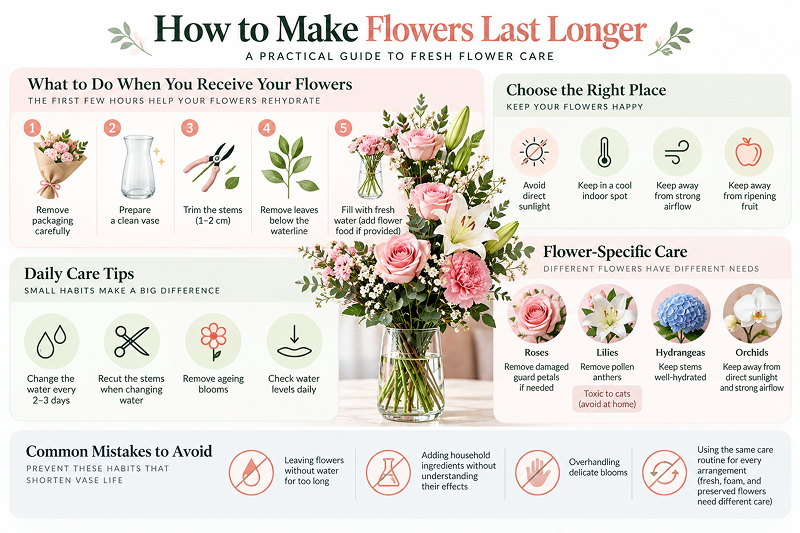
What to Do as Soon as You Receive Your Flowers
The first few hours after receiving a bouquet provide an important opportunity to support its freshness.
Flowers may have spent time in transit, and preparing them correctly helps them rehydrate.
The following flower care guide applies primarily to traditional fresh-cut bouquets intended for vase display. Flower boxes containing floral foam and preserved arrangements have different care requirements and should be handled according to the florist's instructions.
Step 1: Remove the Packaging Carefully
Remove wrapping or protective sleeves that are no longer needed once the bouquet is ready for display.
These materials protect flowers during transportation but may restrict airflow when left around the arrangement for extended periods.
Avoid pulling the flowers apart or unnecessarily rearranging the stems. Professional florists position blooms to create a balanced design, and excessive handling may damage delicate petals.
If a ribbon or tie helps maintain the arrangement's shape, it can remain in place provided the stems are not tightly compressed.
Step 2: Prepare a Clean Vase
Wash your vase thoroughly using warm water and a small amount of mild dish soap. Rinse well to remove any residue.
Even when a vase appears clean, bacteria from previous arrangements may remain inside. Starting with a clean vase and fresh water helps provide suitable conditions for keeping cut flowers hydrated.
Choose a vase that supports the bouquet comfortably. A narrow vase may compress the stems, while one that is too wide may cause the flowers to spread apart.
Starting with a clean, appropriately sized vase helps make flowers last longer by providing suitable conditions for hydration.
Step 3: Trim the Stems Properly
Using clean, sharp scissors or floral shears, trim approximately 1 to 2 centimetres from the bottom of each stem.
An angled cut is commonly recommended because it helps prevent the stem from resting flat against the vase base. However, the cleanliness and freshness of the cut are more important than achieving an exact angle.
If the bouquet contains flowers of different lengths, trim each stem individually to preserve the arrangement's original proportions.
Step 4: Remove Leaves Below the Waterline
Check each stem for leaves that would sit below the water once the bouquet is placed in the vase.
Submerged leaves gradually break down and encourage bacterial growth.
Removing them supports effective cut flower care while keeping the water cleaner.
Healthy foliage above the waterline can remain, as it contributes to the bouquet's overall appearance.
Step 5: Fill the Vase with Fresh Water
Fill the vase with clean, room-temperature water.
If flower food is provided, dissolve it according to the instructions before placing the flowers into the vase.
Commercial flower food typically contains ingredients that provide nutrients, adjust water conditions, and help limit bacterial growth.
Ensure the cut ends of all stems are submerged and that the bouquet remains stable.
Daily Flower Care That Helps Flowers Last Longer
Once your bouquet is arranged, regular maintenance helps preserve its appearance.
Understanding how to care for fresh flowers involves more than watering them once. Small adjustments over the following days can prevent avoidable deterioration.
Choose the Right Place to Display Fresh Flowers
Place your bouquet in a cool indoor area with indirect light and a reasonably stable temperature.
Avoid direct sunlight, heat-producing appliances, strong air-conditioning vents, and fans.
Flowers should also be kept away from ripening fruit, including bananas and apples. These release ethylene gas, which can accelerate ageing in susceptible flower varieties.
In Singapore, a comfortably air-conditioned room without direct airflow is generally preferable to a warm balcony or sunny windowsill.
Change the Water Every Two to Three Days
Replace the vase water every two to three days, or sooner if it becomes cloudy.
Rather than topping up old water repeatedly, empty the vase, rinse away any residue, and refill it with clean water.
During particularly warm weather, daily water changes may be beneficial.
Regular water replacement is a straightforward way to make flowers last longer, especially when bouquets are displayed for several days.
Recut the Stems When Changing Water
When replacing the water, check whether the cut ends of the stems appear discoloured, softened, or deteriorated.
Trim approximately 1 centimetre from the bottom using clean floral shears when necessary.
Repeated trimming gradually shortens the stems, so avoid cutting unnecessarily if the bouquet is already relatively short.
Remove Flowers That Have Finished Blooming
Individual flowers may wilt at different times.
Remove blooms that have developed extensive browning, lost their shape, or begun shedding petals. This keeps the arrangement looking tidy and reduces deteriorating plant material around the remaining flowers.
For varieties such as lilies, unopened buds may continue developing after older blooms have been removed.
Monitor Water Levels Daily
Some flowers absorb water more quickly than others.
Hydrangeas, for example, can be particularly sensitive to dehydration.
Check the water level each day and ensure all cut stem ends remain submerged.
If the water level has dropped, top it up promptly while continuing to replace the water completely at regular intervals.
This simple habit can help make flowers last longer, particularly in warmer indoor environments.
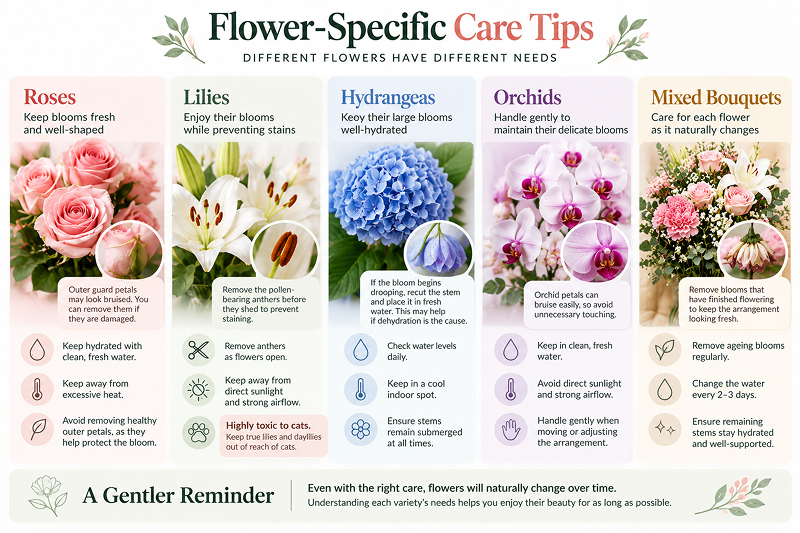
Do Different Flowers Need Different Care?
Most cut flowers benefit from clean water, suitable temperatures, and careful handling. However, certain varieties have characteristics that require additional attention.
Understanding these differences can help you make flowers last longer when caring for mixed bouquets.
Roses
Roses generally respond well to regular hydration and protection from excessive heat.
Their outer guard petals may show slight bruising, creasing, or edge discolouration before the inner petals. This does not always mean the rose is deteriorating; guard petals help protect the inner bloom during handling and transport.
If an outer petal is badly damaged, browning extensively, or beginning to decay, it can be removed carefully. Healthy outer petals do not need to be stripped away simply because they look different from the inner petals.
Handling guard petals selectively can help make flowers last longer without unnecessarily reducing the rose's protective outer layers.
Lilies
Lilies are often arranged with unopened buds so they continue blooming after delivery.
As each flower opens, pollen develops on the stamens. Removing the pollen-bearing anthers before they shed can help prevent staining on petals, clothing, and nearby surfaces.
Handle open lilies gently to avoid bruising their petals.
Important: True lilies and daylilies are highly toxic to cats. Households with cats should avoid bringing these flowers indoors, as even small exposures can cause serious kidney injury.
Hydrangeas
Hydrangeas have large flower heads and can lose moisture quickly when water uptake becomes insufficient.
Check their water levels frequently and ensure their stems remain submerged.
If a hydrangea begins drooping, recutting the stem and placing it in fresh water may help when dehydration is the cause.
However, flowers that have reached the end of their natural vase life may not recover.
Orchids
Cut orchid stems are generally known for maintaining their appearance well when handled carefully.
Many cut orchid sprays carry several individual blooms or buds on one stem. Because the petals and individual florets can bruise from repeated contact, support the stem rather than handling each bloom when repositioning the arrangement.
If one flower on a spray begins to fade, avoid repeatedly rearranging the entire stem unless necessary, as this can knock or bruise the remaining flowers.
Keeping orchid sprays stable, away from direct sunlight and strong airflow, can help make flowers last longer while preserving the appearance of the remaining blooms.
Mixed Bouquets
Mixed bouquets combine flowers with different natural lifespans.
Some blooms may begin fading while others remain firm and attractive.
Good flower bouquet care involves assessing the individual flower instead of repeating the full care routine for every ageing bloom. Remove material that is clearly deteriorating, then check whether the remaining stems are still firm, hydrated, and positioned securely.
This selective maintenance keeps the arrangement looking presentable while allowing healthier flowers to remain undisturbed.
How Professional Florists Help Make Flowers Last Longer
The longevity and changing appearance of a bouquet begin before it reaches your home.
Flower selection, bloom stage, arrangement structure, and transportation all influence what the recipient sees on delivery and how the bouquet develops over the following days.
Selecting Flowers at Suitable Stages of Bloom
Not every flower needs to be fully open when arranged.
Lilies may be selected with unopened buds, while roses and carnations can be incorporated at different stages of maturity.
Combining flowers at suitable stages of development means a bouquet does not have to look identical from its first day to its third or fourth. Some blooms can provide immediate colour and volume, while tighter buds may open later and change the arrangement's character.
Selecting a mix of bloom stages where appropriate can help make flowers last longer visually because the bouquet continues developing instead of reaching its fullest presentation all at once.
However, the ideal stage depends on the flower variety and the intended presentation.
Conditioning Flowers Before Arranging
Professional flower conditioning commonly involves trimming stems, removing damaged foliage, and allowing flowers to hydrate before arranging.
Different flower varieties may respond differently to handling and water, so the florist must consider stem strength, bloom condition, and how the flowers will sit within the arrangement.
These steps prepare flowers for arranging after harvesting and transportation, but they cannot prevent natural ageing.
Creating Balanced Floral Arrangements
A thoughtfully designed bouquet considers the proportions, shapes, colours, and characteristics of individual flowers.
For example, larger blooms may provide visual structure, while smaller flowers and foliage help fill spaces within the arrangement. Stem placement also matters because flowers need support without excessive compression.
When choosing from Art In Bloom's flower bouquet collection, look beyond colour alone. Compare the flower varieties, how open the blooms appear, and whether you prefer a bouquet that looks fuller immediately or one with buds that may continue opening after delivery.
For instance, a bouquet containing lilies with unopened buds may continue changing as the flowers bloom, while an arrangement featuring more fully opened flowers offers a different presentation from the moment it arrives.
Our fresh bouquets are carefully arranged and packaged for transportation. Protecting the shape of the arrangement and limiting unnecessary movement during delivery helps the flowers reach the recipient in the condition intended by the florist.
These professional decisions cannot stop natural ageing, but they can help make flowers last longer by giving the recipient well-supported blooms that are ready for appropriate care at home.
Protecting Flowers During Delivery
Fresh flowers remain sensitive to their surroundings during transportation.
Prolonged heat exposure, rough handling, and inadequate stem support can affect their appearance before they reach the recipient.
Appropriate packaging helps protect delicate petals and minimise unnecessary movement.
When arranging hand bouquet delivery, consider whether someone will be available to receive the flowers and place them in suitable conditions promptly.
At Art In Bloom, we provide local delivery across Singapore, including express delivery for eligible orders. If timing is important, checking the available delivery option can reduce the period between receipt and proper vase care.
For customers arranging bouquet delivery, preparing a suitable display location and clean vase before the flowers arrive can make the transition from delivery to hydration more straightforward.
These considerations help make flowers last longer by reducing avoidable delays between delivery and proper hydration.
Common Flower Care Mistakes That Can Shorten Vase Life
Even when flowers arrive fresh, certain everyday habits can contribute to premature wilting.
Avoiding these mistakes can help make flowers last longer without introducing complicated care routines.
Leaving Flowers Without Water for Too Long
Fresh-cut bouquets depend on adequate hydration.
Leaving them in decorative wrapping without a suitable water source for extended periods may cause stems and petals to lose moisture.
If your bouquet arrives with a temporary water source, follow the florist's instructions before removing it.
The key difference from normal daily maintenance is timing: flowers that have just arrived should be moved into their intended water source promptly rather than left waiting while you prepare the display later.
Adding Household Ingredients Without Understanding Their Effects
You may have encountered suggestions to add sugar, vinegar, aspirin, or other household ingredients to vase water.
However, these remedies do not consistently benefit every flower variety.
Sugar alone, for example, may encourage bacterial growth if the water is not properly conditioned.
Commercial flower food is generally a more reliable option when used according to the manufacturer's instructions.
If flower food is unavailable, clean water and regular maintenance remain practical alternatives.
Overhandling Delicate Blooms
Repeatedly touching petals, moving stems, or rearranging flowers can cause bruising. This is particularly relevant for roses, orchids, and other flowers with delicate petals.
Once your bouquet is positioned securely, limit handling to necessary maintenance.
Using the Same Care Routine for Every Arrangement
Traditional hand bouquets, flower boxes, and preserved flowers do not have identical care requirements.
Fresh flowers arranged in floral foam generally need the foam kept appropriately moist rather than being removed and transferred into a vase.
Preserved flowers should not be placed in water. They are generally best kept dry and away from direct sunlight and excessive humidity.
Following the care instructions suited to your arrangement helps prevent unnecessary damage.
How to Tell Whether Wilted Flowers Can Recover
Wilting does not always mean a flower has reached the end of its lifespan.
Some flowers droop because they have temporarily lost more water than their stems can absorb. Others wilt because their tissues have naturally deteriorated.
Knowing which situation you are dealing with can help you make flowers last longer by focusing recovery efforts on blooms that may still respond to improved hydration.
Signs of Temporary Dehydration
Flowers affected by dehydration may have drooping heads or softened petals while retaining relatively healthy colour and firm stems.
If the vase has run low on water, the flowers may simply have been unable to absorb enough moisture.
Recutting the stems and placing them in fresh water may help restore their appearance.
Prompt rehydration may make flowers last longer when temporary water loss is the problem, although recovery depends on the variety and how long the flowers have been dehydrated.
Signs That Flowers Are Nearing the End of Their Vase Life
Flowers at an advanced stage of ageing may show several changes:
- Extensive browning or translucent petals.
- Soft or deteriorating stems.
- Petals falling away with minimal contact.
- Persistent wilting despite adequate hydration.
- Decaying foliage or unpleasant odours.
These changes are generally not reversible through additional watering or trimming.
At this stage, the useful decision is whether the affected bloom should be removed rather than repeating the same trimming and water-changing steps already used for routine maintenance.
When to Replace Individual Blooms
A mixed bouquet does not need to be discarded simply because one variety has finished blooming.
If the remaining flowers have healthy petals, firm stems, and adequate hydration, they can continue to be displayed.
If you are wondering how to keep cut flowers fresh in a mixed arrangement, removing ageing blooms while maintaining the healthier stems is a practical approach.
Rather than repeatedly reworking the whole bouquet, remove only the flowers that have clearly reached the end of their vase life and leave healthy stems undisturbed where possible.
Conclusion
Fresh flowers naturally change over time, but suitable care can help preserve their appearance and extend their vase life.
From preparing a clean vase and trimming stems to maintaining fresh water and choosing an appropriate display location, small actions can make a meaningful difference.
Understanding the needs of different flower varieties also helps you respond appropriately when individual blooms begin to change.
Ultimately, the best way to make flowers last longer is to combine proper preparation with consistent maintenance rather than waiting until visible wilting occurs.
With the right care, you can continue enjoying your bouquet's colours, textures, and natural beauty beyond the initial celebration.
About Art In Bloom
Art In Bloom is a Singapore-based florist offering fresh flower bouquets, floral arrangements, and gifts for birthdays, anniversaries, graduations, grand openings, and other meaningful occasions.
Our selection includes different floral styles and arrangements suited to personal celebrations, thoughtful gestures, and corporate gifting.
Whether you prefer a classic rose bouquet, a colourful mixed arrangement, or flowers selected for a particular occasion, choosing the bloom style and presentation that suit the recipient is the first step. Suitable care after delivery then helps preserve the arrangement.
If you want to make flowers last longer, choosing a well-prepared fresh arrangement and following practical flower care at home can help you enjoy the flowers beyond the day they arrive.
Looking for fresh flowers for an upcoming celebration? Browse Art In Bloom's floral collection to find an arrangement that suits your occasion, or contact our team for assistance with flower selection and delivery arrangements.
Frequently Asked Question
1. How long do fresh flowers usually last in a vase?
Many fresh-cut flowers remain attractive for approximately five to seven days, although some varieties may last longer or fade sooner.
Their vase life depends on flower variety, maturity, hydration, temperature, and maintenance.
Regular water changes and suitable display conditions can help make flowers last longer, but they cannot prevent natural ageing indefinitely.
2. Should I remove the ribbon or tie holding a bouquet together?
You can keep the ribbon or tie in place if it helps maintain the bouquet's original arrangement.
However, loosen it if the stems appear excessively compressed or cannot sit comfortably in the vase.
Decorative wrapping that prevents proper hydration should generally be removed when transferring a traditional hand bouquet into water.
3. Is warm or cold water better for fresh flowers?
Room-temperature water is suitable for most mixed bouquets.
Some varieties have specific conditioning preferences, but very hot or icy water is generally unnecessary for everyday home care.
Cleanliness and regular water replacement are usually more important than achieving a precise water temperature.
4. Should I mist fresh flowers with water?
Misting is generally unnecessary for most cut flower arrangements.
Although some varieties may tolerate light misting, excess moisture on delicate petals can contribute to spotting or fungal problems, particularly in humid conditions.
Maintaining adequate water around the cut stems is usually more reliable.
5. Can flowers last longer without flower food?
Yes. Commercial flower food can help support cut flowers when used correctly, but it is not the only factor affecting their longevity.
A clean vase, fresh water, trimmed stems, and a suitable display location remain important.
If flower food is unavailable, focus on regular maintenance rather than adding untested household remedies.
6. How often should I trim the stems of fresh flowers?
Checking and trimming the stems every two to three days during water changes is a reasonable routine for many bouquets.
Remove approximately 1 centimetre from the bottom using clean, sharp scissors or floral shears when necessary.
Avoid excessive trimming if the bouquet is already short or the stems remain in good condition.